
Produce Storage Tips
Knowing the right produce storage tips can help your fruits and vegetables stay fresh longer, reduce food waste, and save money on your grocery bill.
While it might seem easiest to toss everything into the refrigerator, many types of produce actually last longer when stored correctly based on their individual needs.
Whether you’re stocking up at the grocery store or bringing home fresh produce from the farmers market, these simple kitchen tips will help you get the most out of every purchase.
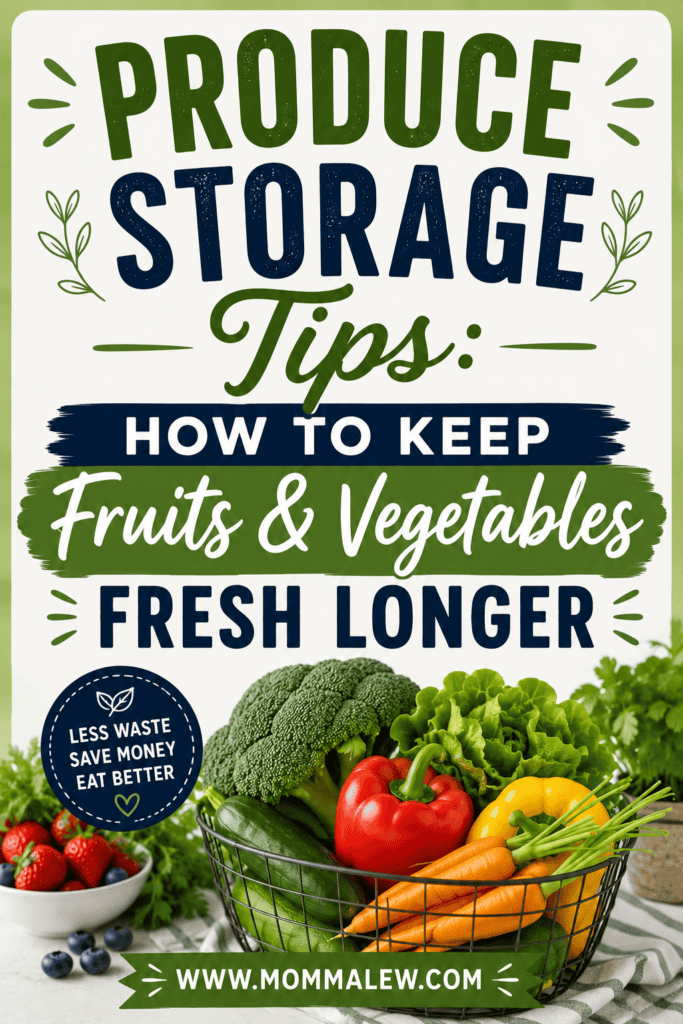
Why Proper Produce Storage Matters
Storing fruits and vegetables correctly helps:
- Keep produce fresh longer
- Reduce food waste
- Save money
- Maintain better flavor and texture
- Preserve nutrients
A few simple changes in how you store your produce can make a big difference in how long it lasts.
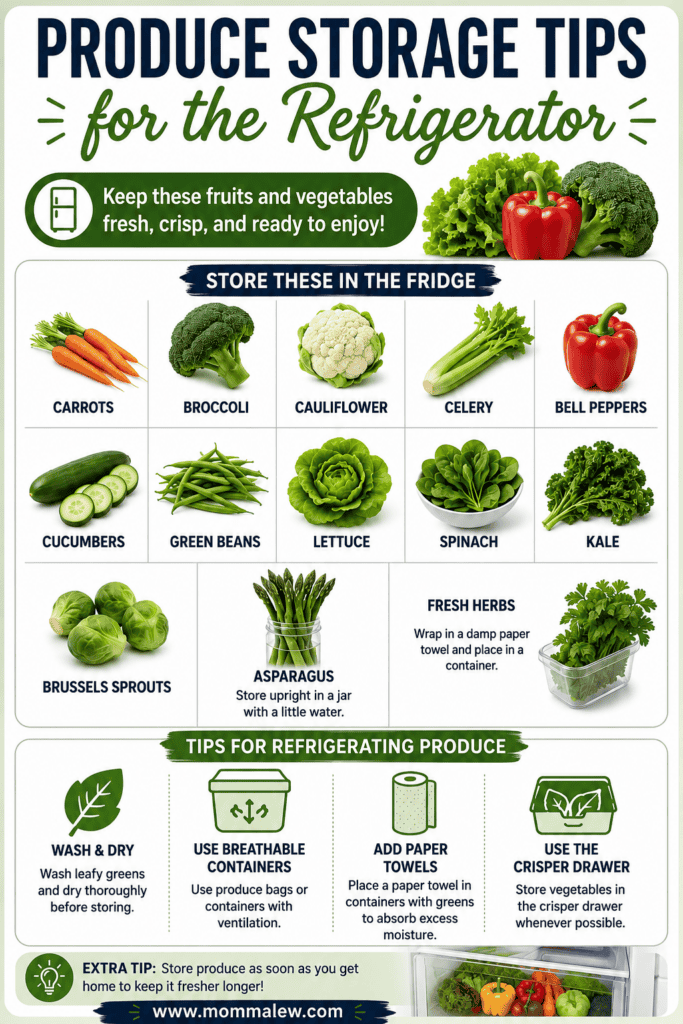
Produce Storage Tips for the Refrigerator
Many vegetables stay crisp and fresh when refrigerated.
Store these in the fridge:
- Carrots
- Broccoli
- Cauliflower
- Celery
- Bell peppers
- Cucumbers
- Green beans
- Lettuce
- Spinach
- Kale
- Brussels sprouts
- Asparagus (standing upright in a jar with a little water)
- Fresh herbs (wrapped in a damp paper towel inside a container)
Tips for Refrigerating Produce
- Store leafy greens after washing and thoroughly drying them.
- Use breathable produce bags or containers with ventilation.
- Place a paper towel in containers with greens to absorb excess moisture.
- Keep vegetables in the crisper drawer whenever possible.
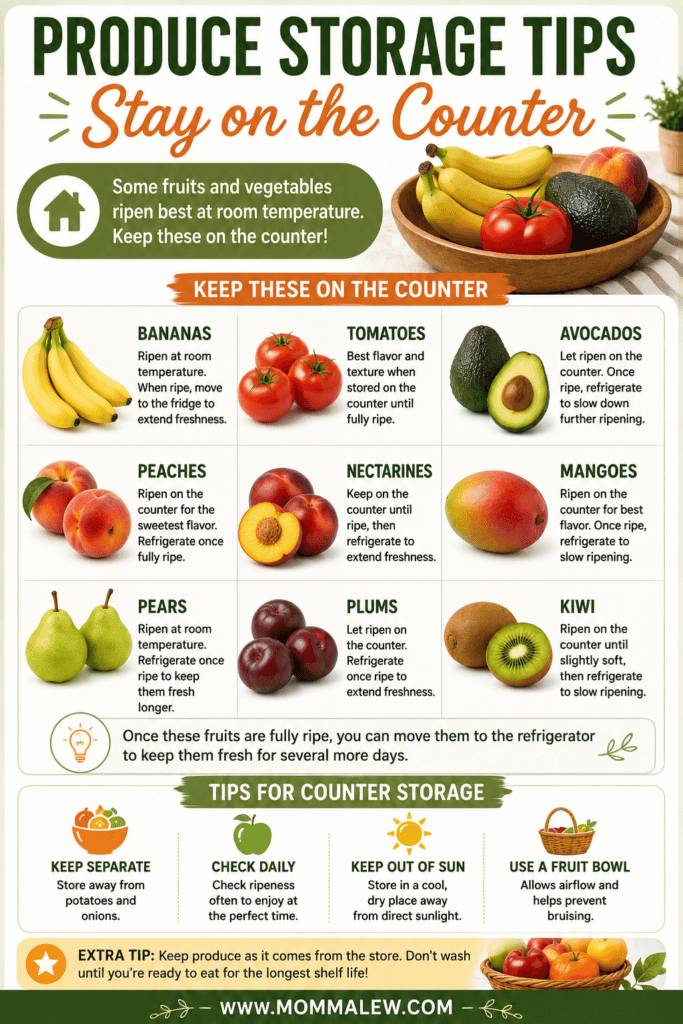
Produce That Should Stay on the Counter
Some fruits and vegetables continue ripening after they’re picked and should be stored at room temperature first.
Keep these on the counter:
- Bananas
- Tomatoes
- Avocados
- Peaches
- Nectarines
- Mangoes
- Pears
- Plums
- Kiwi
Once fully ripe, many of these fruits can be moved to the refrigerator to extend their freshness by several days.
Which Fruits Should Be Refrigerated?
After ripening, refrigerate:
- Apples
- Grapes
- Cherries
- Berries
- Citrus fruits
- Pineapple (cut)
- Melons (after cutting)
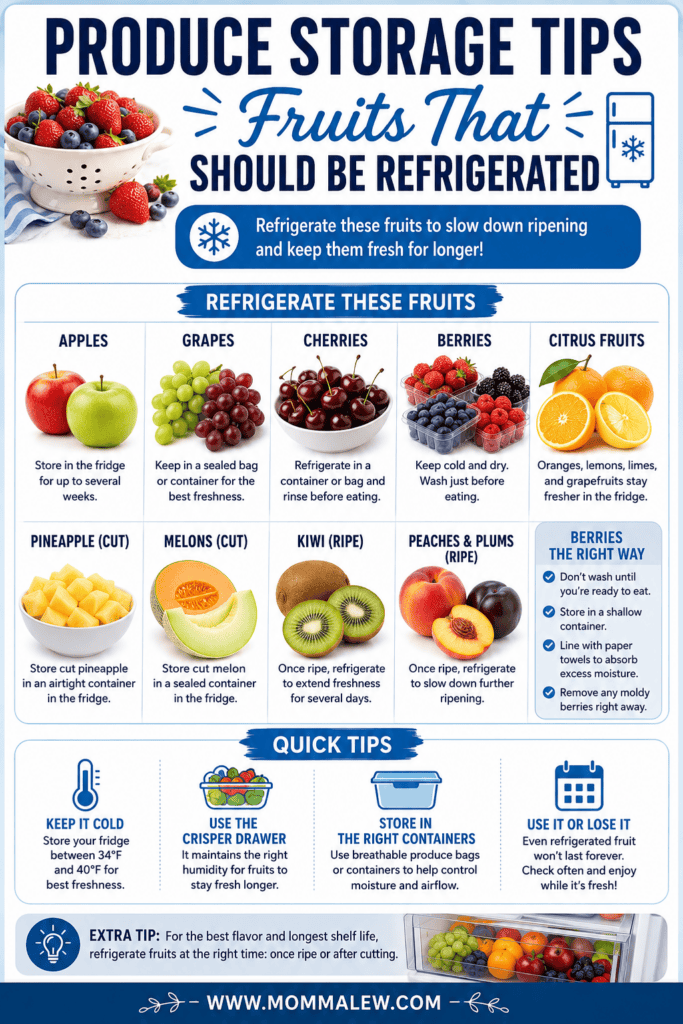
Store Berries the Right Way
Berries spoil quickly because of excess moisture.
For the longest shelf life:
- Wait to wash berries until you’re ready to eat them.
- Remove any moldy berries immediately.
- Store them in a shallow container lined with paper towels.
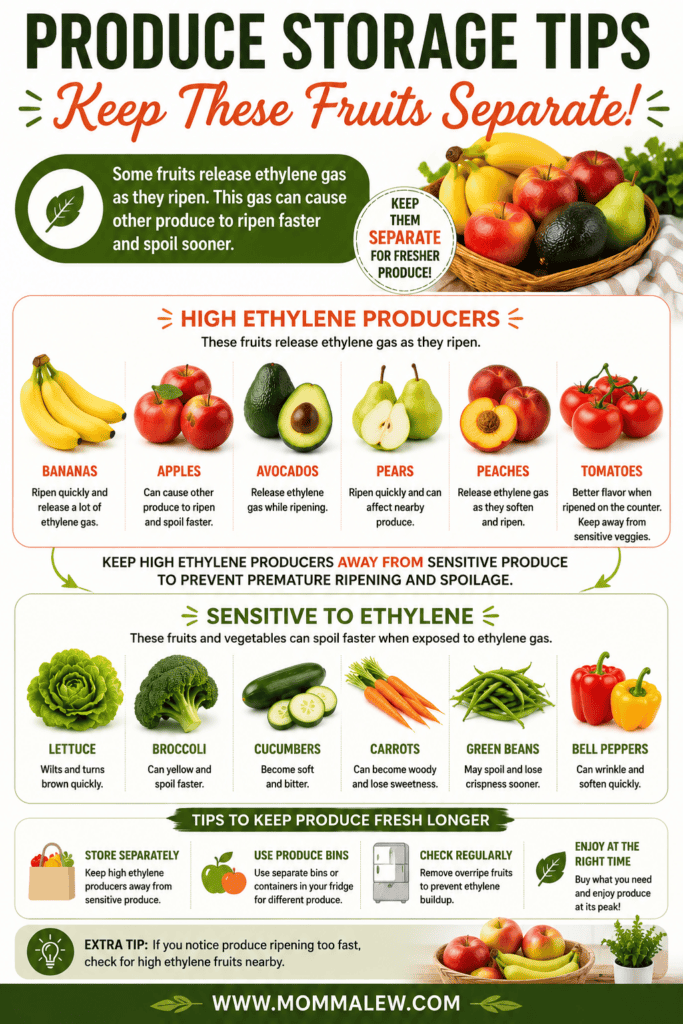
Keep Ethylene-Producing Fruits Separate
Some fruits naturally release ethylene gas, which speeds up ripening.
High ethylene producers include:
- Apples
- Bananas
- Avocados
- Pears
- Peaches
- Tomatoes
Keep these away from sensitive produce like:
- Lettuce
- Broccoli
- Cucumbers
- Carrots
- Green beans
Separating them helps prevent vegetables from spoiling before you’re ready to use them.
Should You Wash Produce Before Storing?
In most cases, no. Washing adds moisture, which encourages mold and spoilage.
Instead:
- Wash produce just before using it.
- The exception is leafy greens if you’ll dry them thoroughly before refrigerating.
- Pat washed produce completely dry before storing.
Best Containers for Produce Storage
Using the right storage container can extend freshness. Good options include:
- Glass food storage containers
- Produce keeper containers
- Breathable mesh produce bags
- Reusable silicone storage bags
- Paper towels to absorb moisture
Avoid sealing fresh produce in airtight plastic bags unless recommended for that specific fruit or vegetable.
5 PCS Large Fruit Containers for Fridge – Leakproof Food Storage Containers with Removable Colander – Dishwasher & microwave safe Produce Containers Keep Fruits, Vegetables, Berry, Meat Fresh longer4-Pack Refrigerator Drawer Organizer Bins, Clear Stackable Pull Out Fridge Organizers and Storage Container, with Strainer Layer for Fruits, Vegetables, Drinks, Snack and Food
Rubbermaid Brilliance Glass Food Storage Containers, Assorted Sizes, Set of 9, BPA-Free, Leak-Proof, Clear
Rubbermaid FreshWorks Produce Saver, Medium and Large Storage Containers, 8-Piece Set, Set of 4, Med & Lg, Clear
MAQIHAN 6 Pack Reusable Produce Bags Cotton Mesh Produce Bags Mesh Storage Produce Bags Reusable Durable Double Stitched With Drawstring Produce Bag For Vegetables,Fruit & Grocery Shopping (2L,2M,2S)
Reusable Silicone Food Storage Bags, 10 Pack 4 Size Leak proof Dishwasher Safe Reusable Freezer Bags for Food Storage Containers, Lunch Bag for Sandwich, Marinate Meat, Fruit


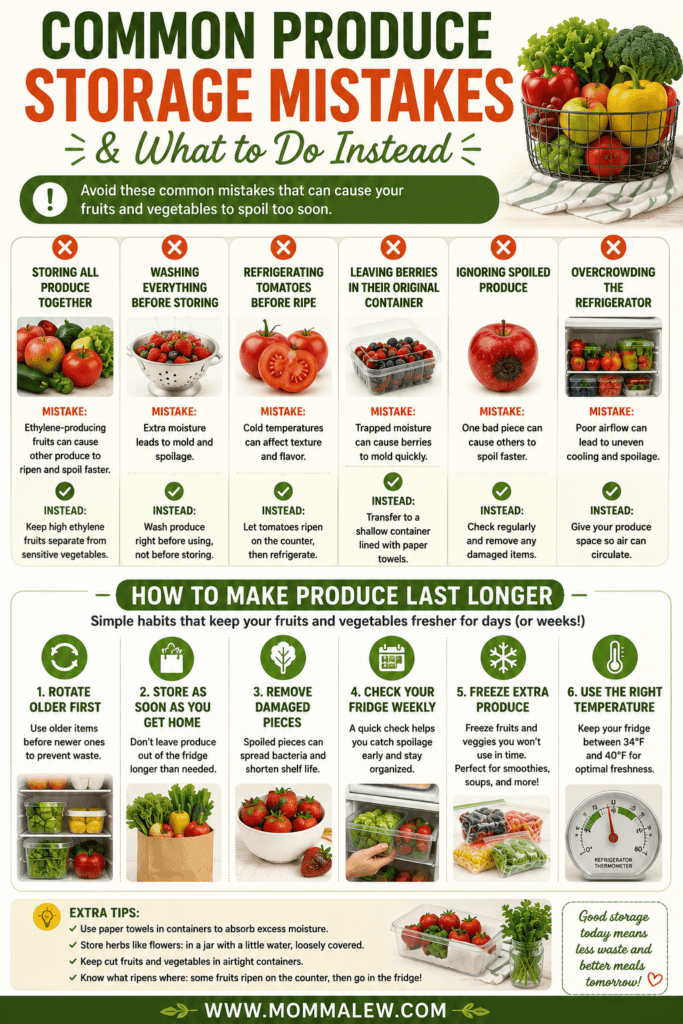
Common Produce Storage Mistakes
Avoid these common mistakes:
- Storing all produce together
- Washing everything before putting it away
- Refrigerating tomatoes before they’re ripe
- Leaving berries in their original container once they become damp
- Ignoring spoiled produce that can quickly affect nearby fruits and vegetables
- Overcrowding the refrigerator, which reduces airflow
How to Make Produce Last Longer
A few habits can dramatically extend freshness:
- Rotate older produce to the front.
- Store produce as soon as you get home.
- Remove damaged pieces quickly.
- Check your refrigerator weekly.
- Freeze extra produce before it spoils.
Wash and dry them thoroughly, then store them in the refrigerator with a paper towel inside a breathable container to absorb excess moisture.
No. Potatoes and onions should be stored separately because onions release moisture and gases that cause potatoes to sprout more quickly.
Root vegetables like carrots, beets, potatoes, onions, and cabbage often last several weeks when stored properly.
More Kitchen Tips
Once you’ve mastered these produce storage tips, check out these helpful kitchen guides:
These practical tips can help reduce food waste, save time, and make everyday cooking easier.